The Hybrid Care Model: Balancing Facility-Based and In-Home Childcare for Growth
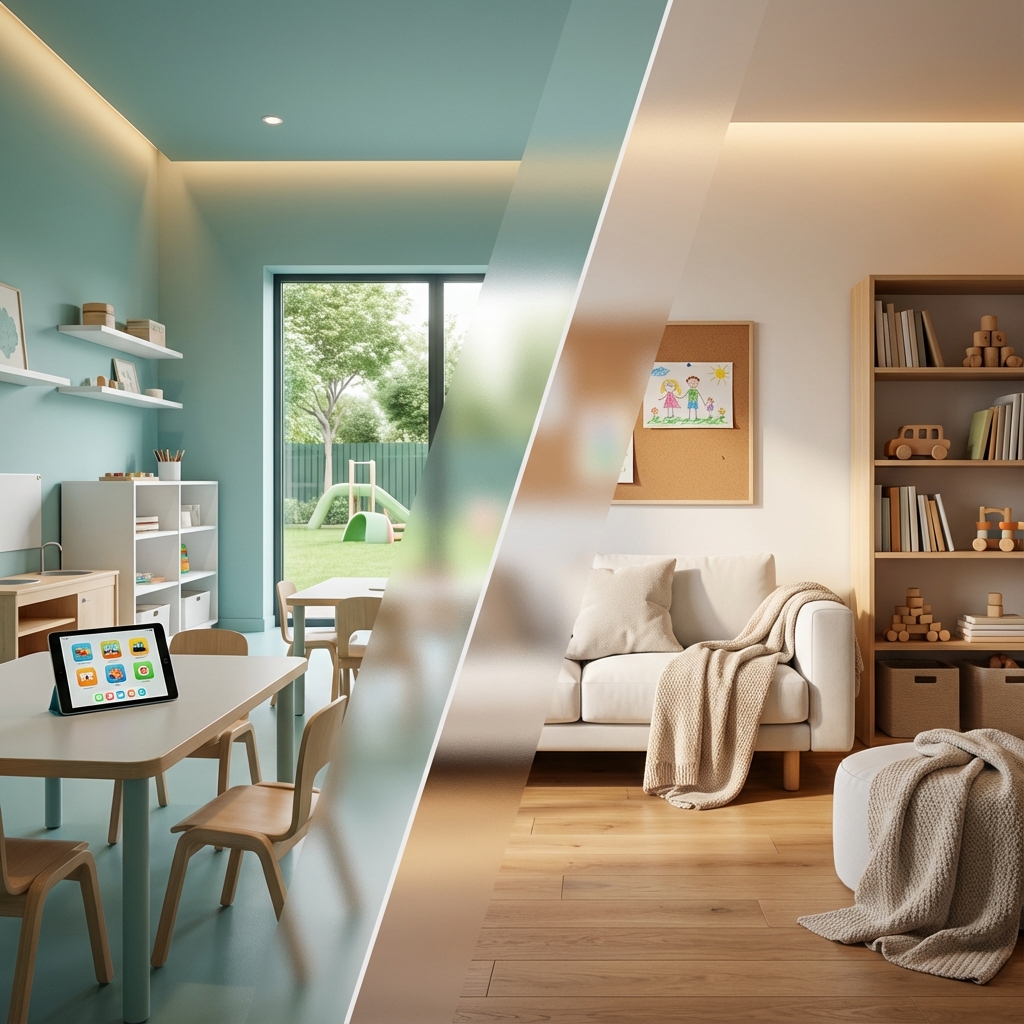
The Blurred Lines of Modern Care
For decades, the childcare industry was divided into two distinct silos: large-scale commercial centers and small-scale, home-based family childcare. However, as we look toward 2026, those boundaries are dissolving. We are witnessing the rise of the "Hybrid Care Model"—a strategic approach that allows owners to manage a diverse portfolio of care environments under a single, high-authority brand.
This shift is driven by a new generation of parents who value flexibility and "hyper-local" options, as well as by owners who are looking for more agile ways to scale their operations without the massive capital expenditure of traditional brick-and-mortar expansion.
What is the Hybrid Model?
In the hybrid model, a central "Hub" (usually a high-performing commercial center) act as the administrative and pedagogical anchor for several "Spokes" (smaller, specialized satellite locations or micro-centers).
This allows for:
- Centralized Administration: One enrollment team, one billing system, and one Director of Quality for multiple locations.
- Brand Consistency: Families get the same curriculum and the same "peace of mind" whether their child is in a hub or a spoke.
- Optimized Staffing: Teachers can be cross-trained and rotated between locations to prevent burnout and ensure coverage.
The hybrid model isn't just about expansion; it’s about optimization. It allows you to meet parents where they are—whether that's in a corporate office building or a quiet residential neighborhood.
The Micro-Center Advantage
A major component of the 2026 hybrid shift is the "Micro-Center"—sites that are licensed for 15-30 children. These locations often have lower overhead and are much easier to open than a 100-child mega-center.
For the modern provider, micro-centers are the ultimate "proof of concept." They allow you to test new markets and reach "childcare deserts" that are too small for a large facility but desperate for high-quality care. By branding these micro-centers under your hub’s authority, you instantly give them the credibility they need to fill their enrollment waitlists.
Revenue Diversification and Stability
One of the biggest risks in the traditional childcare model is "single-site dependency." If an HVAC system fails or a local road construction project blocks your entrance, your entire revenue stream is at risk.
The hybrid model provides a natural hedge. By diversifying your footprint across multiple locations and care types, you build a more resilient business. This diversification is highly attractive to lenders and investors, who see multi-site operations as having a significantly lower risk profile than single-site centers.
Navigating the Multi-Site Culture Challenge
The biggest hurdle to a successful hybrid model is not licensing or real estate; it is culture. How do you ensure that the teacher in your satellite location feels just as supported and connected as the teacher in your main hub?
Success in 2026 requires a move toward digital cultural tools—internal apps, virtual huddles, and shared digital training libraries. You must build a "Brand Identity" that transcends the physical walls of any one building. At New Day Partners, we often say that you aren't building a daycare; you are building a system.
The Future of Scaling
The hybrid model is the future of scaling because it is inherently more agile. It allows you to grow with the market, adapting to shifts in demand without being tied to a single, rigid facility model.
As we move into 2026, the question for owners is no longer where you will build your next 10,000-square-foot facility. The question is how you will weave your brand into the fabric of your community through a diverse network of high-quality care nodes.
Conclusion: Agility is the New Authority
The old silos are falling. The winners of the 2026 childcare market will be those who embrace the complexity of the hybrid model—who understand that quality care shouldn't be restricted by the size or location of a building.
At New Day Partners, we specialize in helping owners build the operational frameworks required to manage multi-site, hybrid networks. We help you build the systems that allow you to grow without losing your soul.
Junya Herron is helping the next generation of childcare leaders think beyond the building and build a brand that lasts.
Start Your Childcare Business the Right Way
Navigating state licensing and setting up a professional facility is overwhelming. We help you skip the mistakes and launch with confidence.
Starting Your First Center?
Get our complete startup blueprints with licensing roadmaps, business plans, and facility setup guides to launch with confidence.
View Startup BlueprintsAlready Operating a Center?
Get expert consulting for compliance audits, enrollment growth, QRIS improvement, and operational optimization.
View Consulting Plans